A price that cannot move
The quote is free, written and fixed once issued. Budget the exact figure and pay the exact figure — there is no mid-job renegotiation, and no line items appearing at the end.
Heating · Basingstoke & north Hampshire
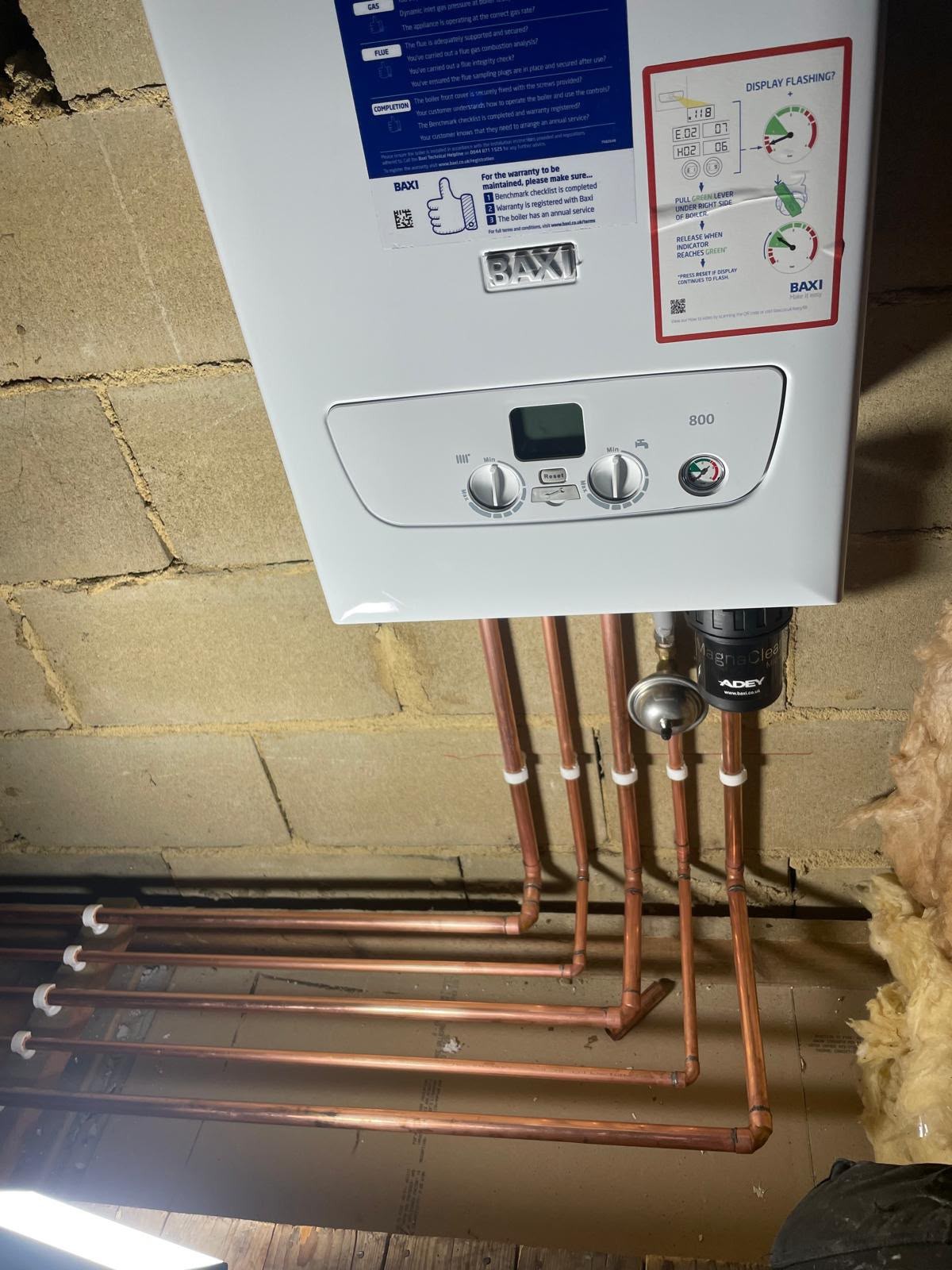
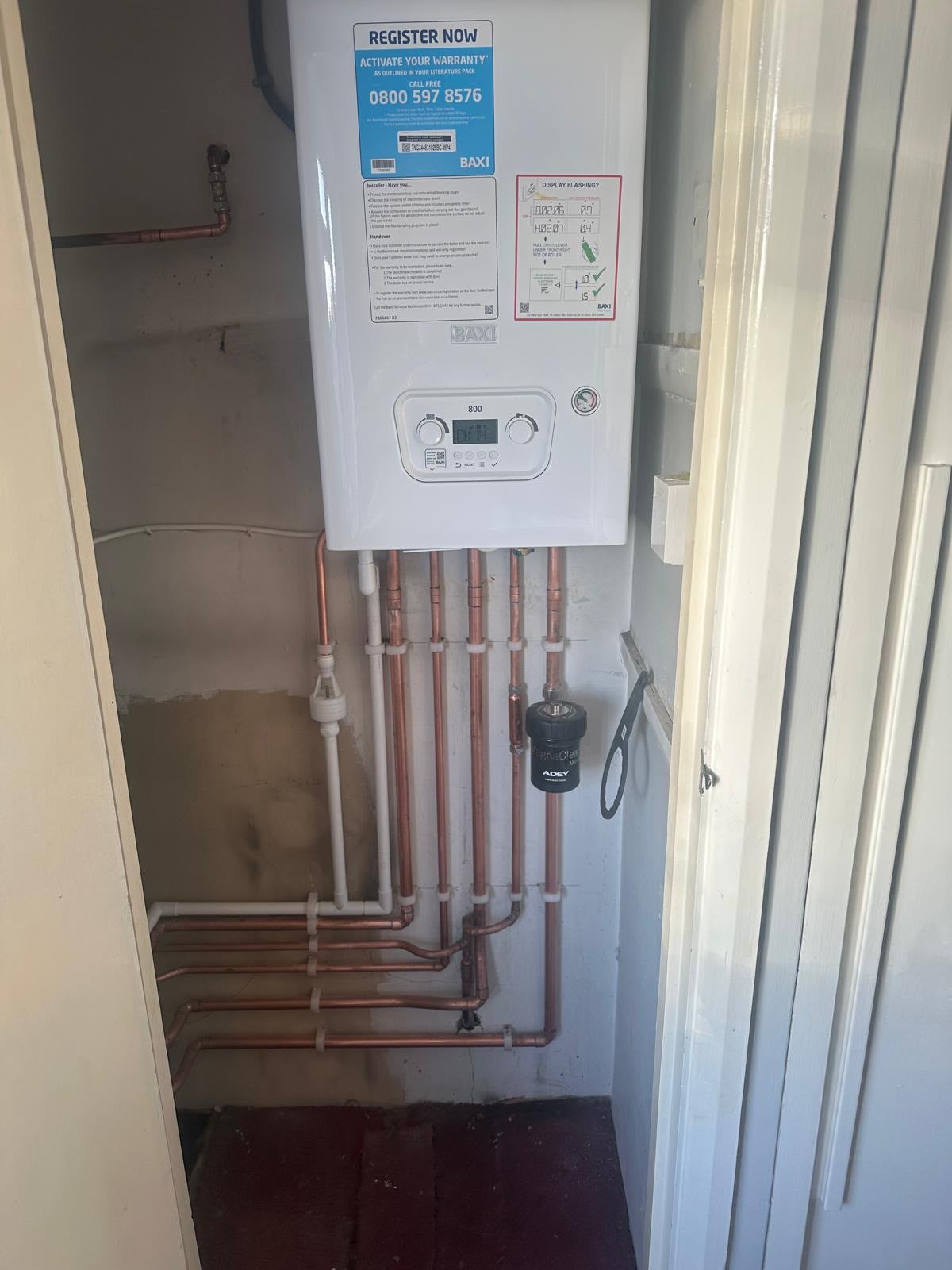
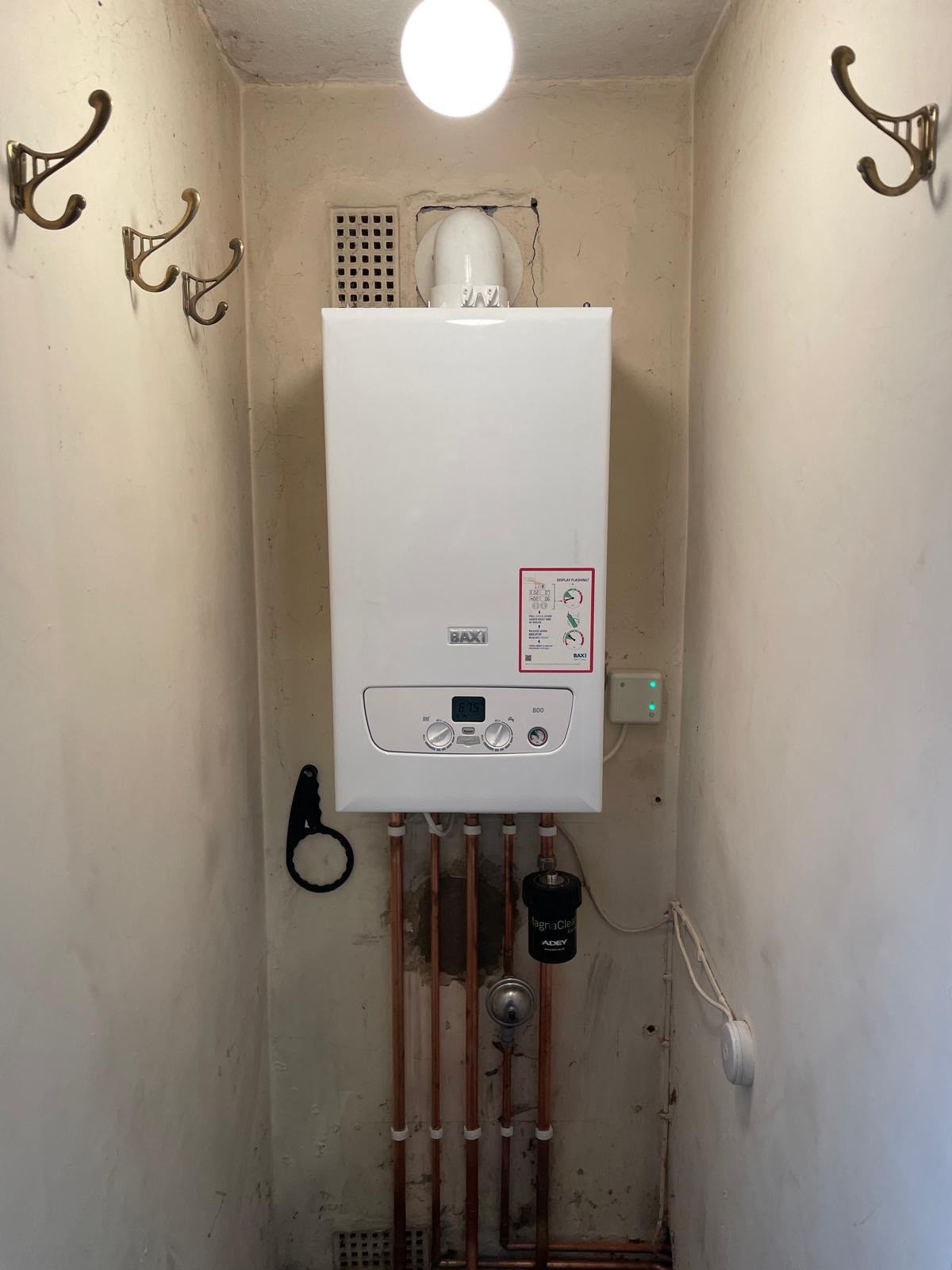
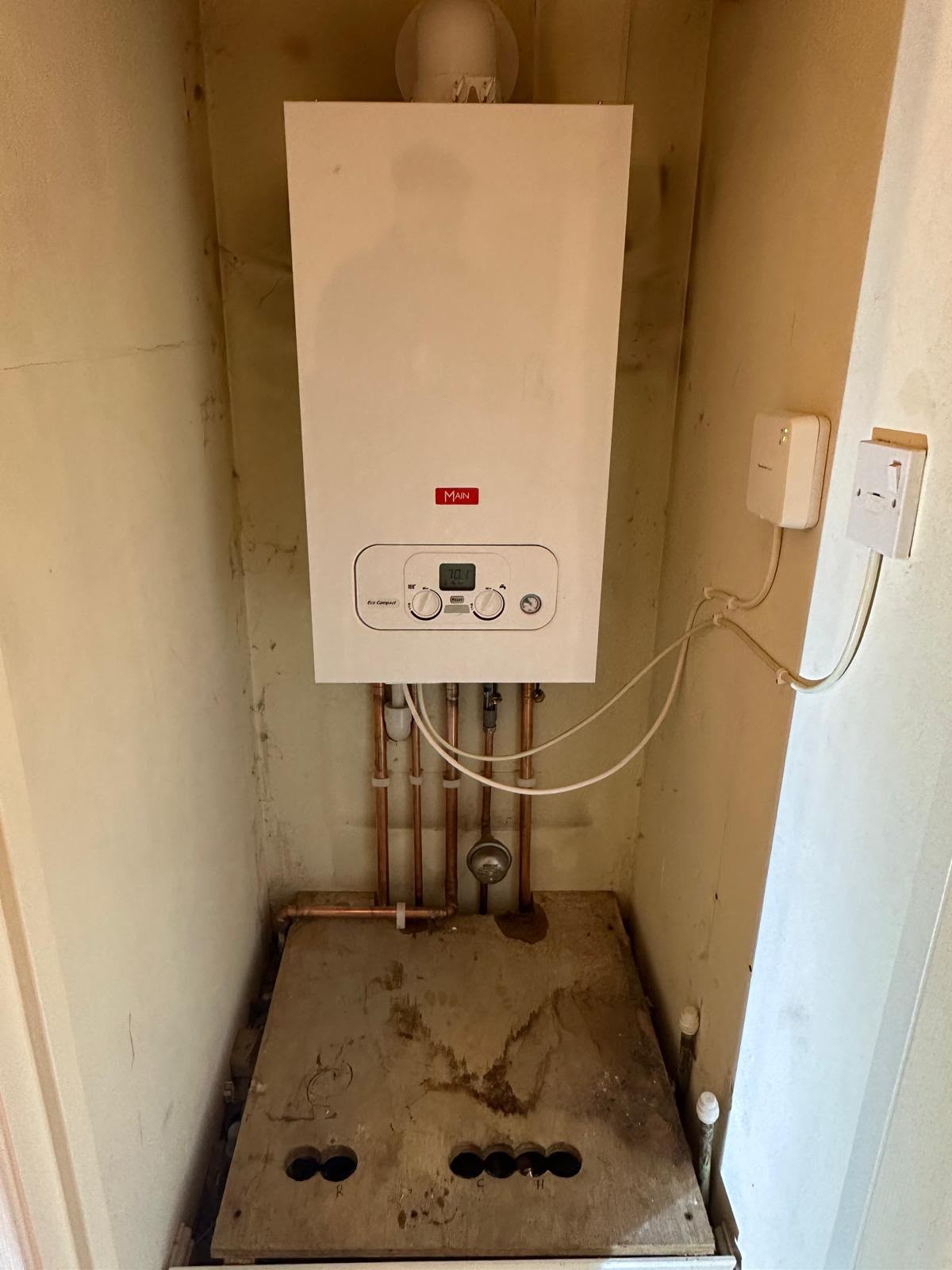
A new boiler fitted by a Gas Safe registered engineer for a price that is fixed the moment you accept it — from £1,900 + VAT, with up to 10 years' manufacturer warranty on the appliance and a one-year workmanship guarantee on the installation itself.
Gas Safe registered 593588 · 15 years qualified · £2 million public liability · quotes free and fixed once given
New and replacement boilers fitted to a fixed quote, with up to 10 years' manufacturer warranty depending on the unit.
15 years qualified
Apprenticeship completed 2011
Gas Safe 593588
Registered engineer
F-Gas certified
Refcom REF1025590
£2 million cover
Public liability insured
Fixed quotes
Free, and fixed once given
Overview
A boiler installation is not simply swapping one box on the wall for another. The appliance is only one part of a system that also includes the gas supply, the flue route, the condensate run, the pipework feeding your radiators, the controls that tell the boiler what to do, and the water quality moving through all of it. Get any one of those wrong and you own an expensive appliance that underperforms, cycles constantly, or fails inside its warranty period for reasons the manufacturer will not cover.
Sam has been qualified for 15 years, having completed his apprenticeship in 2011, and has run SFB Heating and Cooling as a self-employed engineer for the last eight of those years. The person who surveys your property is the person who fits the boiler and the person who answers the phone if something needs looking at afterwards. Nothing is subcontracted out, so nothing gets lost between one trade and the next.
Every installation starts with a free survey and ends with a written, fixed price. Fixed means fixed: once the quote is issued and accepted, that is the figure you pay. If the job turns out to be more involved than expected, that is a problem for us to absorb rather than a mid-job conversation about extra charges while your heating is in pieces.
The cost of leaving it
An ageing boiler rarely fails all at once. It fails in instalments — a diverter valve here, a pump there, a pressure sensor next winter. Each individual bill looks tolerable in isolation, which is exactly how households end up spending more on repairs across three years than a new installation would have cost outright, and still owning an appliance with no warranty behind it.
There is an efficiency cost running alongside the repair bills. Older non-condensing appliances throw a meaningful share of the gas you pay for straight out of the flue, and a boiler working against a sludged system burns longer to reach the same room temperature. You feel that on the standing bill every single month, whether or not anything has broken.
Then there is timing. Boilers do not fail in mild weather when engineers have open diaries. They fail in the first genuine cold snap, when every heating firm in Hampshire is already committed and the household is choosing between an emergency call-out charge and a week of no hot water. Planning a replacement in your own time removes that entire scenario.
The safety element is the part people underestimate. A poorly maintained or badly installed gas appliance can produce carbon monoxide, and a corroded flue or a blocked condensate route can turn a nuisance fault into a genuine hazard. Gas work is legally restricted to Gas Safe registered engineers for exactly this reason.
Our process
Five stages, all handled by the same engineer, so you always know what has happened and what happens next.
01
We look at the property rather than just the boiler: number of bathrooms and outlets, radiator count and condition, incoming gas supply, mains water pressure and flow, existing flue route and condensate options. This is what determines the correct boiler type and output, and it is done before any figure is quoted.
02
You receive a clear written price covering the appliance, all installation materials, controls, the system treatment, and making good. Free to obtain, with no obligation, and fixed once given. If more than one boiler option makes sense for your home, you see the difference in cost and warranty side by side.
03
The old appliance is isolated, drained and removed, gas and water connections are reworked to suit the new unit, the flue is fitted and sealed correctly, and the condensate is run to a compliant termination. Floors and carpets are protected, and the working area is kept contained rather than spread through the house.
04
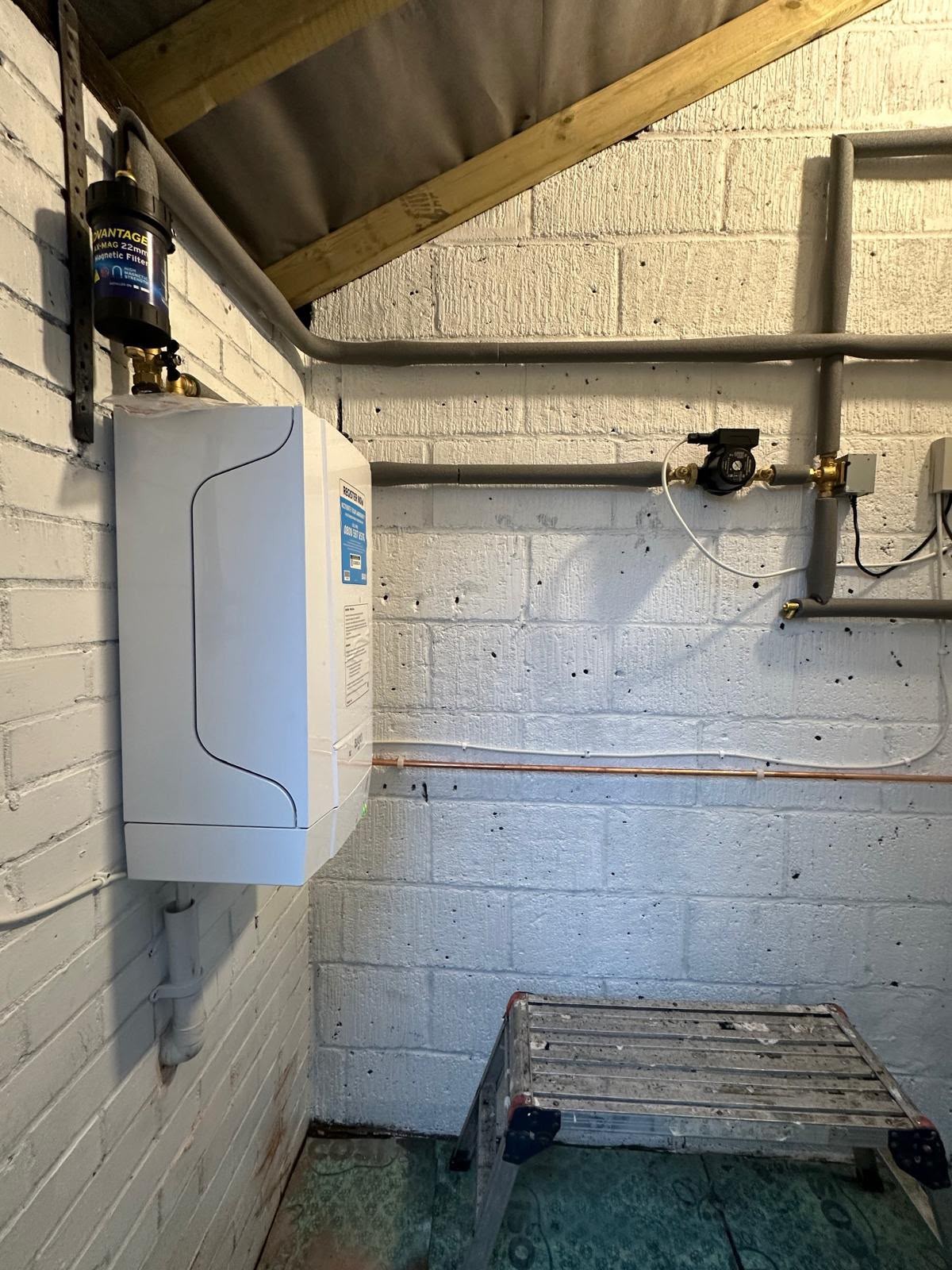
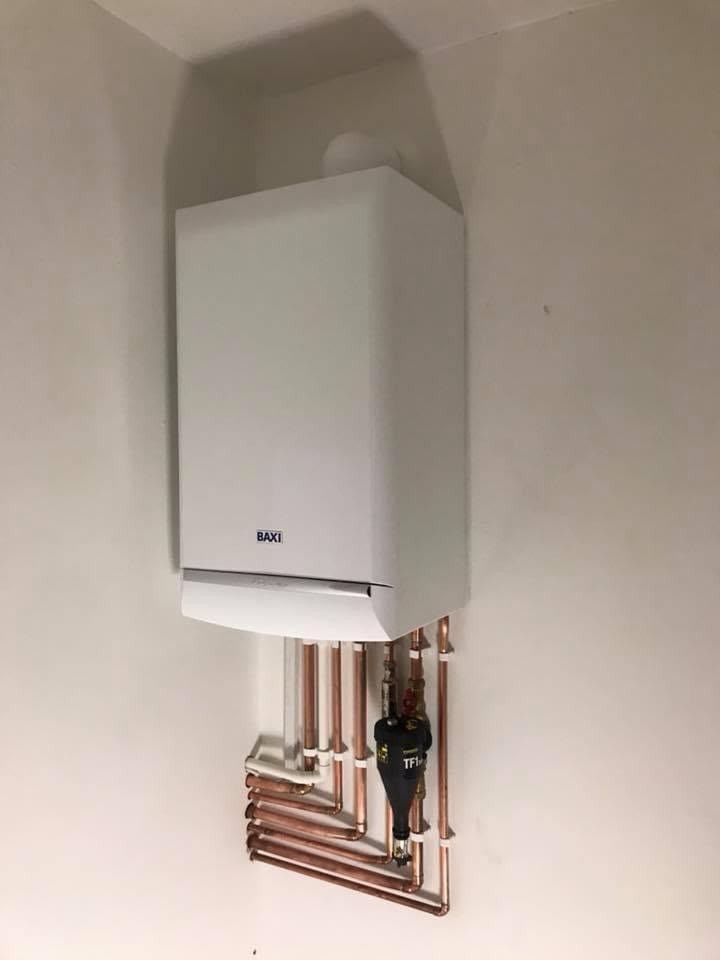
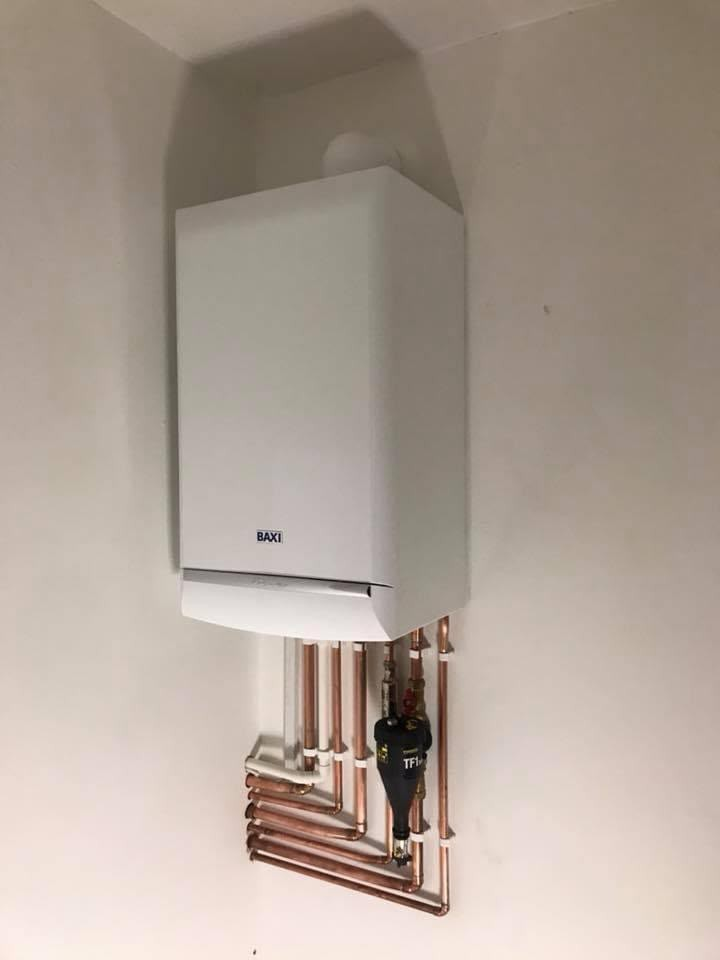
The system is cleansed and treated with inhibitor, a magnetic filter is fitted where the installation calls for it, and the boiler is commissioned to the manufacturer's schedule — gas rate checked, combustion analysed, pressures and controls set. This step is what keeps the manufacturer warranty valid, and it is not optional on our jobs.
05
We walk you through the controls, set the heating and hot water schedule with you, register the appliance with the manufacturer for its warranty, and leave the paperwork with you. The installation carries our one-year workmanship guarantee alongside the appliance warranty, which runs up to 10 years depending on the boiler chosen.
Benefits
Concrete outcomes, not adjectives.
The quote is free, written and fixed once issued. Budget the exact figure and pay the exact figure — there is no mid-job renegotiation, and no line items appearing at the end.
New boilers carry up to 10 years' manufacturer warranty depending on the unit fitted. Because the system is flushed, treated and commissioned properly and the appliance is registered on the day, that warranty holds when you come to use it.
A boiler matched to your property's demand modulates rather than short-cycling, so it burns less gas reaching the same room temperature than an oversized or ageing appliance working against a dirty system.
Flow rate and outlet demand are measured during the survey, so the system is specified around how your household actually uses water rather than around whatever happened to be there before.
Sam surveys, fits and commissions. If you need something looked at afterwards, you speak to the person who did the work, not a call centre reading a job number back to you.
Gas Safe registered under 593588, with £2 million public liability insurance and full commissioning paperwork left with you at handover. Everything is checkable.
In detail
The right answer depends on the property. Here is how the main options differ and where each one belongs.
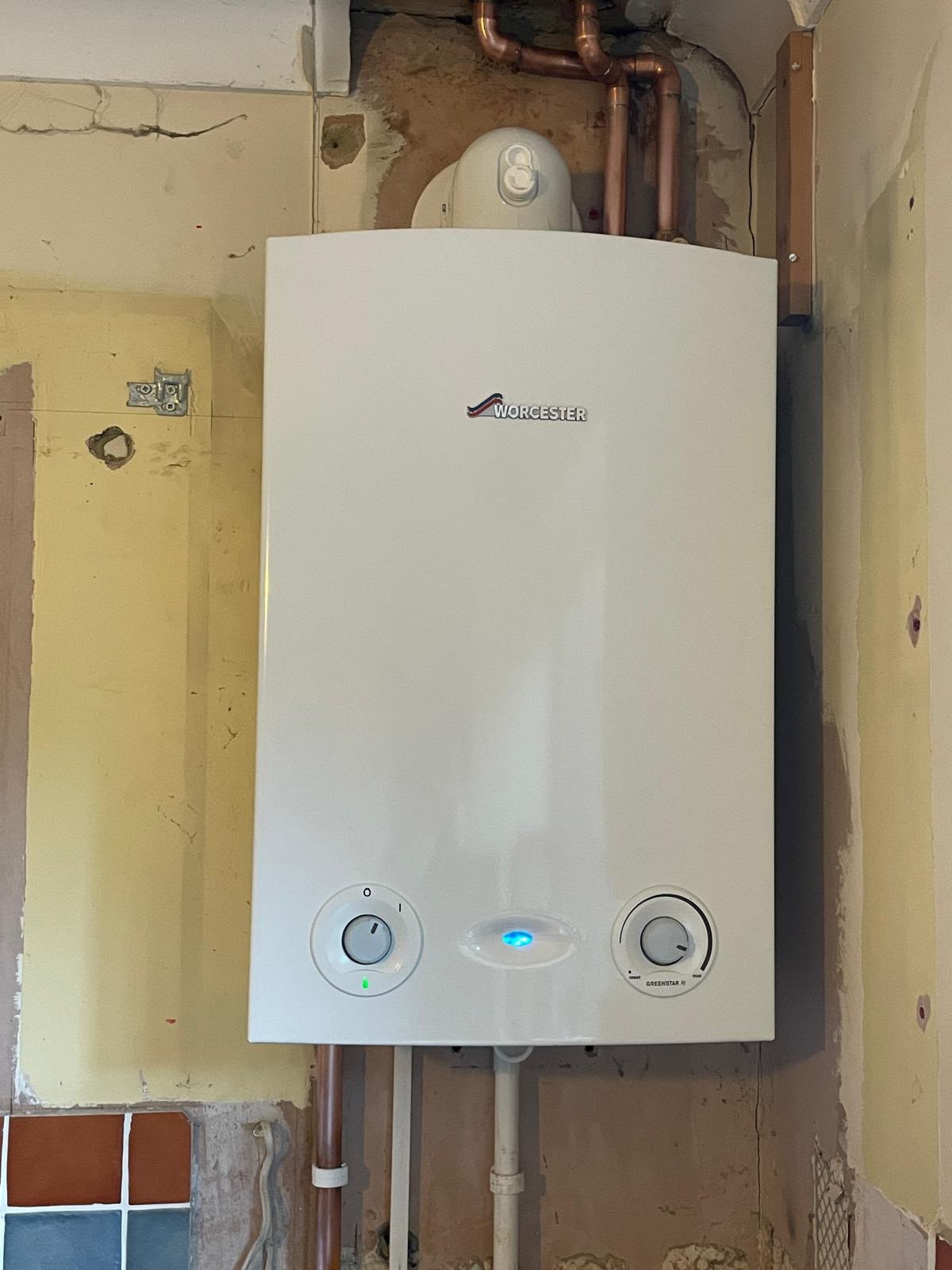
A combination boiler heats water on demand straight from the mains, so there is no hot water cylinder and no cold water tank in the loft. That makes it the natural choice for flats, terraces and smaller family homes where space is tight and mains pressure is healthy.
The limitation is simultaneous demand. A combi delivers one strong hot outlet at a time; run a shower and a kitchen tap together and both suffer. Where a household regularly needs two showers at once, a combi is usually the wrong specification regardless of how attractive its price and footprint look.
A system boiler heats a stored cylinder of hot water, typically an unvented mains-pressure cylinder. That stored volume is what allows several outlets to run properly at the same time, which is why this configuration suits larger houses and any property with two or more bathrooms.
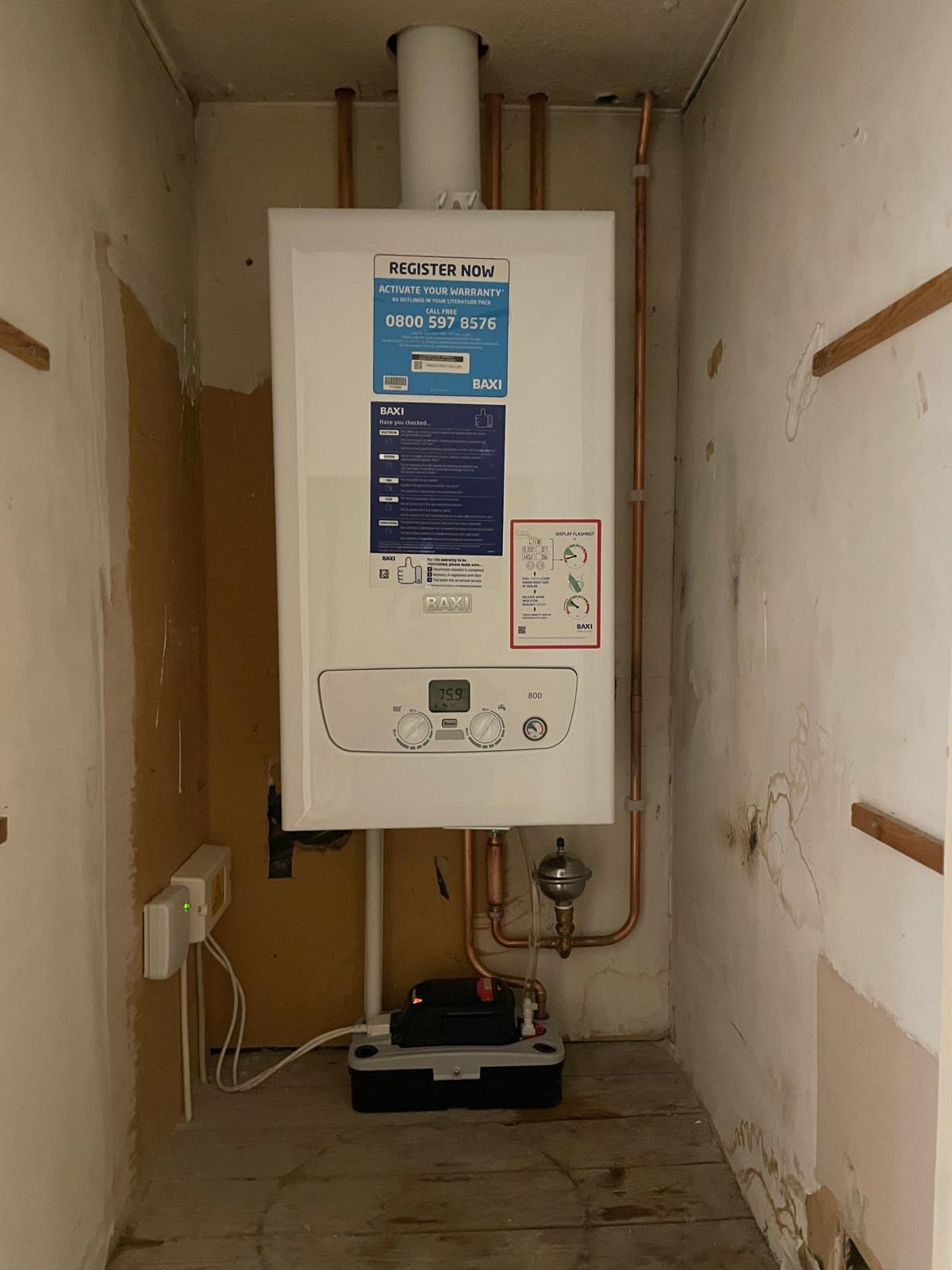
Because the cylinder runs at mains pressure, the pump and expansion vessel work is built into the boiler and the loft tanks disappear. We install and maintain unvented cylinders as a service in their own right, so the whole arrangement is specified as one piece of work rather than split between trades.
Regular boilers keep the traditional arrangement of a hot water cylinder plus a feed and expansion tank. They remain the sensible route in older properties where the existing pipework, radiator circuits or low mains pressure would make a wholesale change to a combi disruptive and expensive.
Replacing like for like on a regular system is often the quickest, least invasive installation available, and it keeps the option of upgrading the cylinder separately later on.
Every modern condensing boiler produces acidic condensate that has to be run away safely, and every flue has to terminate where the manufacturer's instructions and the regulations allow — clear of openings, boundaries and anything the plume would damage. Relocating a boiler is usually a flue and condensate exercise before it is anything else.
External condensate runs need adequate fall and frost protection, because a frozen condensate pipe is one of the most common reasons a healthy boiler locks out in January. Where a run has to go outside, it is upsized and insulated rather than left as a bare pipe.
A boiler running at a flow temperature that is too high never enters condensing mode, which quietly wastes a slice of every unit of gas it burns. Setting flow temperature and control strategy properly at commissioning costs nothing and shows up on the running bill from the first month.
Programmable and smart controls are specified where they earn their place — zoning a larger property, or giving a household with irregular hours accurate scheduling. They are not added to inflate a quote.
Most of the housing stock we work on around Basingstoke, Hook, Tadley, Overton and Kingsclere falls into a few familiar patterns: post-war semis on regular systems, newer estate housing on combis, and period properties where pipework has been extended piecemeal over decades. Each has its own predictable pinch points, and the survey is where those get found rather than discovered on installation day.
For landlords, the appliance is only half the obligation — the annual landlord gas safety certificate (CP12) is the other half, and we handle both so the property stays compliant without you chasing two different trades.
Questions
Anything not covered here, call 07825 758511 and ask. 8am–5pm, Monday to Friday, with out-of-hours emergency call-outs available.
Boiler installations start from £1,900 + VAT. The final figure depends on the appliance chosen, the boiler type, the flue and condensate work involved and any system alterations needed. You get a free survey and a written price that is fixed once issued, so the number you agree is the number you pay.
A straight swap of a like-for-like appliance is usually a single day. Changing boiler type — for example moving from a regular system to a combi, or relocating the boiler to a different wall — typically runs to two days because of the pipework, flue and condensate changes involved. Your quote states which of these your job is before you commit.
Manufacturer warranties run up to 10 years depending on the boiler fitted, and the appliance is registered with the manufacturer on the day of installation. On top of that, the installation work itself carries our one-year workmanship guarantee.
Yes. The system is cleansed and dosed with inhibitor, and a magnetic filter is fitted where the installation calls for it. This is not an optional extra — most manufacturer warranties require it, and skipping it is the fastest way to damage a new heat exchanger. Heavily sludged systems may warrant a full powerflush, which is quoted openly if needed.
Yes. Heating and hot water are off for the working portion of the day while the changeover happens, and are back on before we leave. Floors and carpets are protected and the work area is kept contained.
As a rule, one bathroom and healthy mains pressure points to a combi; two or more bathrooms, or a household that runs showers simultaneously, points to a system boiler with an unvented cylinder. The survey measures flow rate and outlet demand so the recommendation is based on your property rather than a general assumption.
Sometimes, and we will say so. If the appliance is a reasonable age, parts are available and the fault is isolated, a repair is the cheaper answer. Where repairs are stacking up, parts support has ended, or the unit is non-condensing, the arithmetic usually favours replacement — and we will show you that arithmetic rather than just quoting for a new boiler.
Yes — Gas Safe registered under number 593588, and F-Gas certified (Refcom REF1025590) for air conditioning work. The business also carries £2 million public liability insurance. All of it is checkable before any work begins.
Basingstoke and the surrounding north Hampshire towns and villages, including Hook, Hartley Wintney, Tadley, Andover, Kingsclere, Overton, Micheldever and Aldermaston.
Bank transfer is preferred and cash is accepted. Quotes are free and fixed once given, so there is no deposit conversation midway through the job and no surprise at the end.
Next step
Free survey, written quote, no obligation and no pressure. If a repair is the better answer for your situation, we will tell you that instead.