
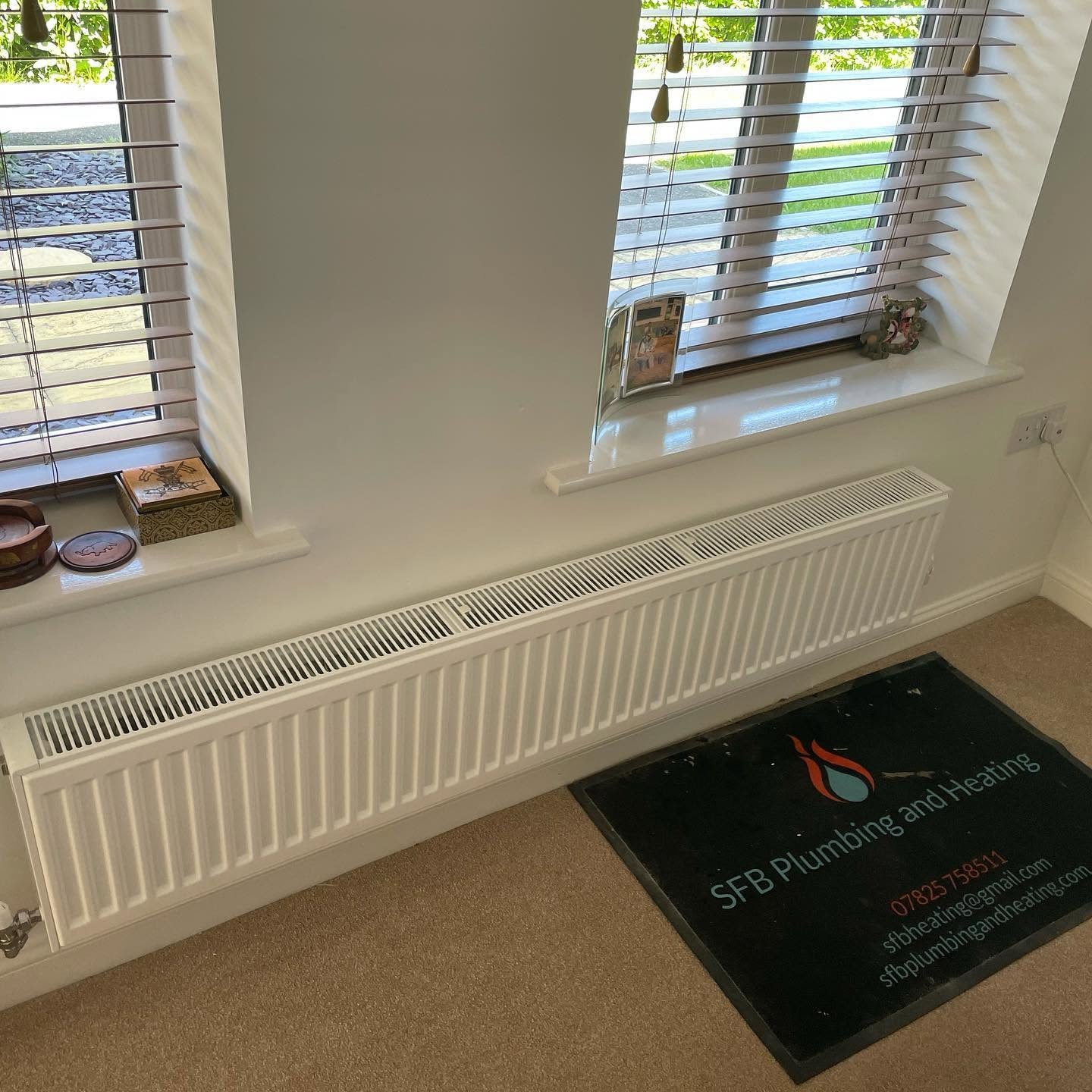
Radiators hot from top to bottom
Panels that have been half-working for years return to full output, so rooms reach temperature instead of hovering below it.
Heating · Basingstoke & north Hampshire
Years of magnetite and debris removed from the system so every radiator heats end to end, the pump stops straining and your boiler stops burning gas to push water through a blocked circuit — protecting a warranty worth up to 10 years.
Gas Safe registered 593588 · 15 years qualified · £2 million public liability · quotes free and fixed once given
Sludge and debris flushed out of the system so radiators heat evenly and the boiler stops working against itself.
15 years qualified
Apprenticeship completed 2011
Gas Safe 593588
Registered engineer
F-Gas certified
Refcom REF1025590
£2 million cover
Public liability insured
Fixed quotes
Free, and fixed once given
Overview
A powerflush is a forced circulation clean of the entire heating system. A pump is connected in place of, or alongside, the system's own circulation, and cleansing chemicals are driven around the pipework and radiators at high flow and reversing direction, lifting the magnetite sludge, corrosion debris and scale that has settled over the years and carrying it out through a magnetic filter and to waste.
It is not the same as draining the system and refilling it, which is what some quotes describe as a flush. Draining removes the water and leaves the sludge exactly where it settled, in the bottom of radiator panels and the low points of pipework. Powerflushing is what actually moves that material out of the property.
The clue that a system needs one is almost always the same: radiators cold at the bottom and warm at the top, several of them, plus a pump that is working harder than it should and a boiler that kettles or short-cycles. At that stage the system is actively damaging the components attached to it.
The cost of leaving it
Magnetite is iron oxide — the product of steel radiators corroding from the inside where oxygen has reached the system water. It is magnetic, abrasive and dense, and once it is circulating it goes everywhere the water goes. That includes the pump bearings, the motorised valve bodies, the narrow waterways of a modern heat exchanger and the plate exchanger inside a combi.
The performance cost arrives first. Restricted radiators mean rooms take longer to heat, so the boiler runs longer for the same result and you pay for the difference in gas every single day. Restricted circulation also drives the boiler's return temperature up, which pushes it out of condensing operation and quietly wipes out the efficiency you paid for.
The component cost arrives next. Pumps fail early. Motorised valves stick. And eventually the heat exchanger blocks, which on many appliances is the point at which replacement becomes the sensible option rather than repair.
The most expensive version of this is fitting a brand-new boiler to a dirty system. Manufacturers require the system to be cleansed and treated, and a heat exchanger failure caused by contamination is exactly the kind of claim that gets declined — leaving you paying for a new appliance twice.
Our process
A methodical circuit-by-circuit clean, finished with protection that keeps it clean.
01
Radiator temperatures are read across the property, water condition is sampled, and pump, valves and boiler behaviour are checked. This confirms a powerflush is the right answer and identifies any radiator too corroded to survive one.
02
The flushing pump is connected to the system and a cleansing chemical is introduced, then circulated to break down sludge, magnetite and scale deposits throughout the pipework and emitters.
03
Flow is reversed and directed through each radiator in turn at high velocity, with agitation where panels are heavily loaded, so debris is lifted out of the panels rather than simply stirred around the circuit.
04
Contaminated water is dumped to waste and the system is flushed through until the water runs clear. Radiator temperatures are re-read across the property to confirm the difference is real rather than assumed.
05
The system is dosed with corrosion inhibitor and a magnetic filter is fitted or checked so future debris is captured rather than circulated. Work carries our one-year workmanship guarantee, and you are told what maintenance keeps the system clean from here.
Benefits
Measurable change, not a claim.
Panels that have been half-working for years return to full output, so rooms reach temperature instead of hovering below it.
A freely circulating system lets the boiler reach its target and shut down instead of running long cycles against a restriction.
Removing abrasive magnetite protects pump bearings, valve bodies and the heat exchanger — the three most expensive things sludge destroys.
Manufacturers require a clean, treated system. Flushing before or alongside a new installation is what keeps up to 10 years of cover enforceable.
Kettling, banging and gurgling are usually symptoms of deposits and poor circulation, and they go when the cause does.
Inhibitor dosing and a magnetic filter mean the system stays clean rather than re-silting over the next two winters.
In detail
What separates a genuine powerflush from a drain-and-refill with a label on it.
A drain-down empties the system and refills it. It removes suspended dirt in the water and nothing else — the settled sludge stays exactly where it was. A chemical flush adds cleanser and circulates it using the system's own pump, which helps on lightly contaminated systems but lacks the velocity to shift heavy deposits.
A powerflush uses an external high-flow pump with flow reversal, which is what actually lifts settled magnetite out of radiator panels and low points. On a badly contaminated system it is the only one of the three that will make a real difference.
The clean itself uses a cleansing agent to break down sludge and scale deposits. Where limescale is a significant part of the problem — common on chalk-fed north Hampshire supplies — a descaling agent is used as well.
The critical final step is inhibitor. Corrosion inhibitor prevents the electrochemical reaction that creates magnetite in the first place, and it needs re-dosing after any work that drains part of the system. A flush without a proper inhibitor dose is a temporary result.
Sealed pressurised systems are the most straightforward to flush. Older vented systems with a feed and expansion tank need the tank isolated so the flush water is not simply diluted or lost.
Microbore pipework — the small-diameter runs found in many 1970s and 1980s installations — blocks more readily and needs care, because the same deposits that partially restrict a 15mm pipe can close a microbore run entirely. Underfloor heating circuits and manifolds also require a different approach to panel radiators.
Occasionally a radiator is so corroded internally that flushing exposes a pinhole that the sludge had effectively been plugging. An honest assessment identifies the likely candidates before the flush starts, so it is a planned replacement rather than a surprise.
That is part of why the system is assessed first. Nobody benefits from discovering a failed radiator halfway through a flush with the water already dumped.
Manufacturers make a clean system a condition of warranty for a reason: the narrow waterways of modern heat exchangers block far more readily than the cast-iron sections of the boilers they replaced.
When we install a boiler, the system is cleansed, treated and filtered as standard. Where the existing system is heavily contaminated, a full powerflush is quoted openly as part of that work rather than skipped to make a quote look cheaper.
A magnetic filter captures circulating magnetite continuously and is cleaned at each annual service, which is one of the practical reasons a service visit earns its keep.
Inhibitor levels should be checked annually too, and re-dosed after any repair that drains part of the system. Between the two, a flushed system can stay clean for many years rather than needing the same treatment again in three.
Questions
Anything not covered here, call 07825 758511 and ask. 8am–5pm, Monday to Friday, with out-of-hours emergency call-outs available.
It depends on the number of radiators and how contaminated the system is, so it is surveyed and quoted individually. Quotes are free and fixed once issued, so the price you agree is the price you pay.
Most domestic systems take the better part of a day. Larger properties with more radiators, or systems with very heavy contamination, take longer — the quote sets out the expectation before we start.
The clearest signs are radiators cold at the bottom but warm at the top, black water when you bleed a radiator, a boiler that kettles or bangs, rooms taking far longer to heat than they should, and a pump that is noisy or has failed before.
No. Draining removes the water and leaves the settled sludge behind. A powerflush uses an external high-flow pump with flow reversal to lift deposits out of the radiators and pipework and carry them out of the property.
Where the cause is sludge — radiators warm at the top and cold at the bottom — yes. Where the cause is a seized valve, a failed pump or poor balancing, that is a heating repair rather than a flush, and the assessment establishes which applies before you spend anything.
The system must be clean and treated before a new boiler goes on it — manufacturers require it and contamination-related heat exchanger failures are commonly declined under warranty. On a heavily sludged system, that means a powerflush, and we quote it openly rather than hiding it.
It can reveal them. On very old systems, corrosion deposits sometimes mask pinholes in radiators that were already failing. The pre-flush assessment identifies likely candidates so replacement can be planned rather than discovered mid-job.
A well-maintained system with inhibitor and a magnetic filter, checked annually, should go many years without needing another. Systems that are repeatedly drained without re-dosing inhibitor re-contaminate far faster.
Yes — corrosion inhibitor is dosed on completion and a magnetic filter is fitted or checked, because a flush without protection is a result that will not last.
Basingstoke and north Hampshire, including Hook, Hartley Wintney, Tadley, Andover, Kingsclere, Overton, Micheldever and Aldermaston.
Next step
Free assessment, a fixed written price, and radiator temperatures checked before and after so you can see what changed.