Every room reaches temperature
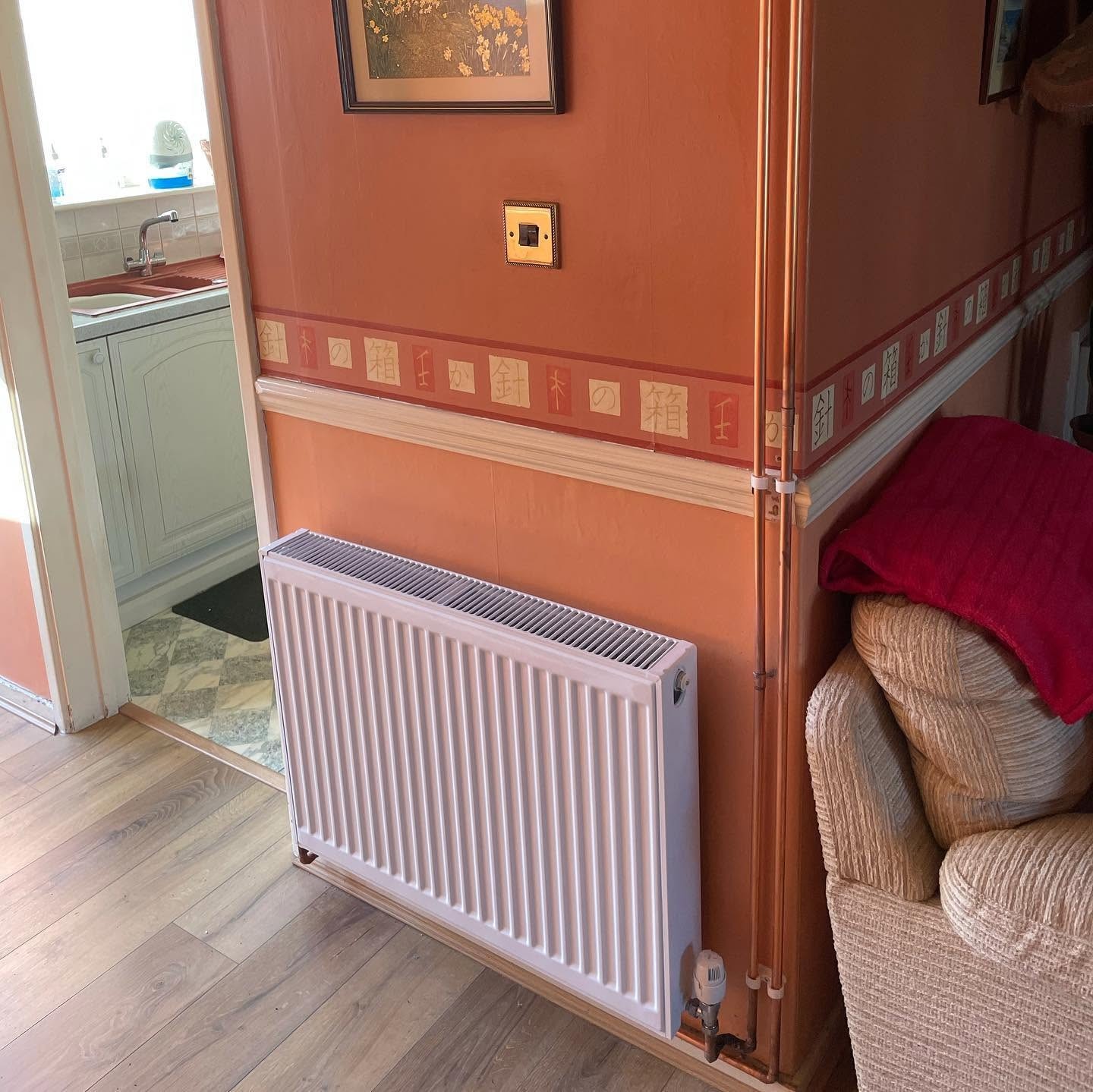
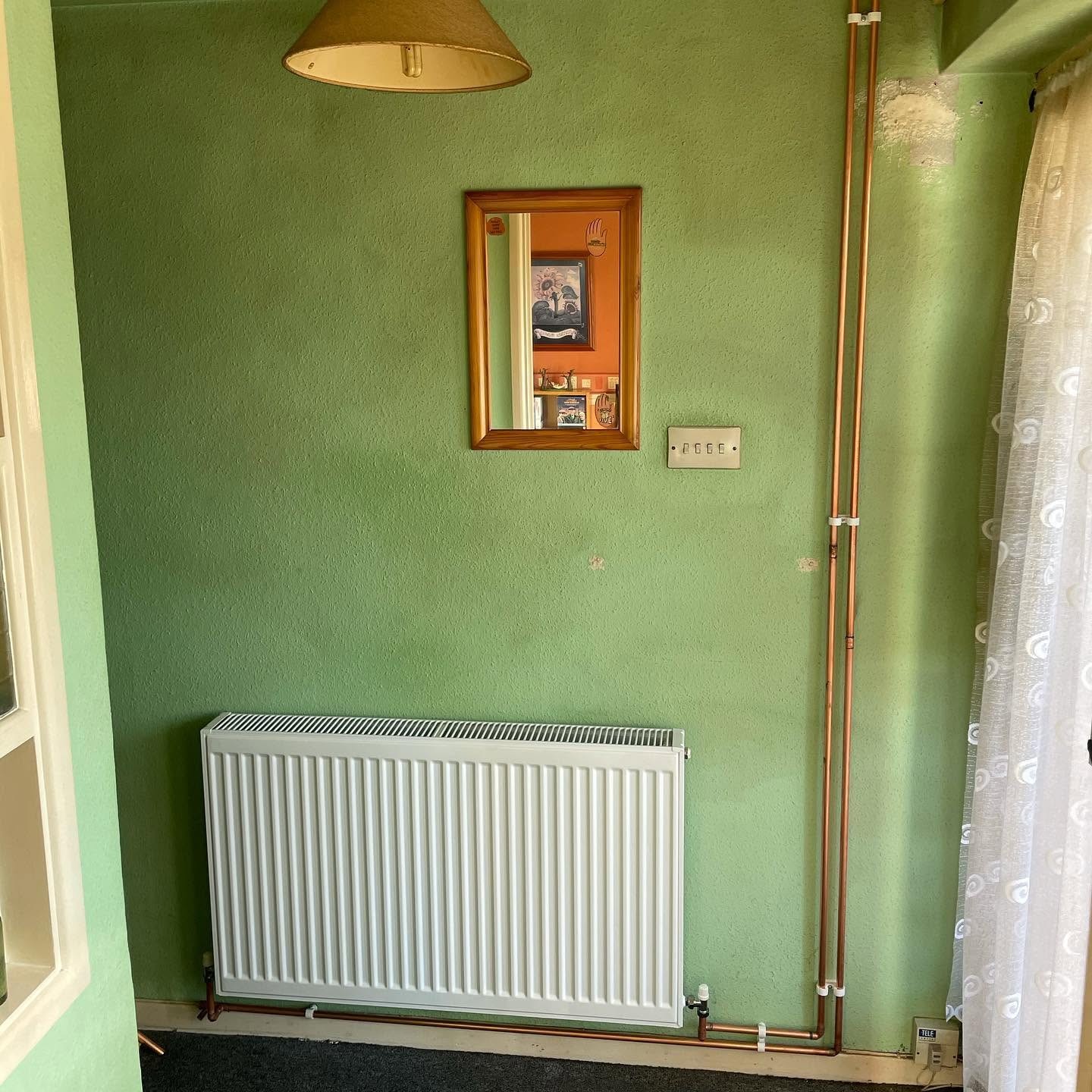
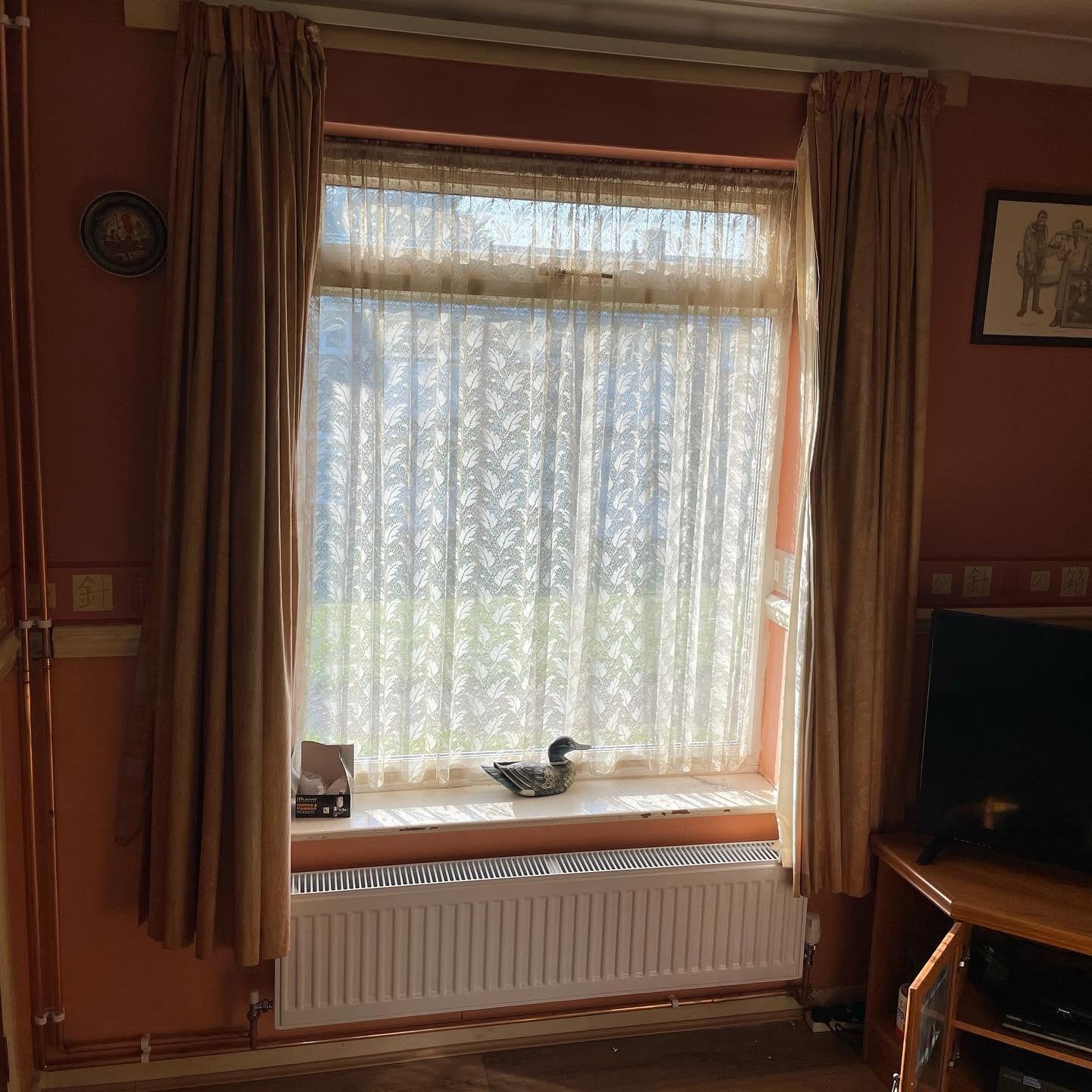
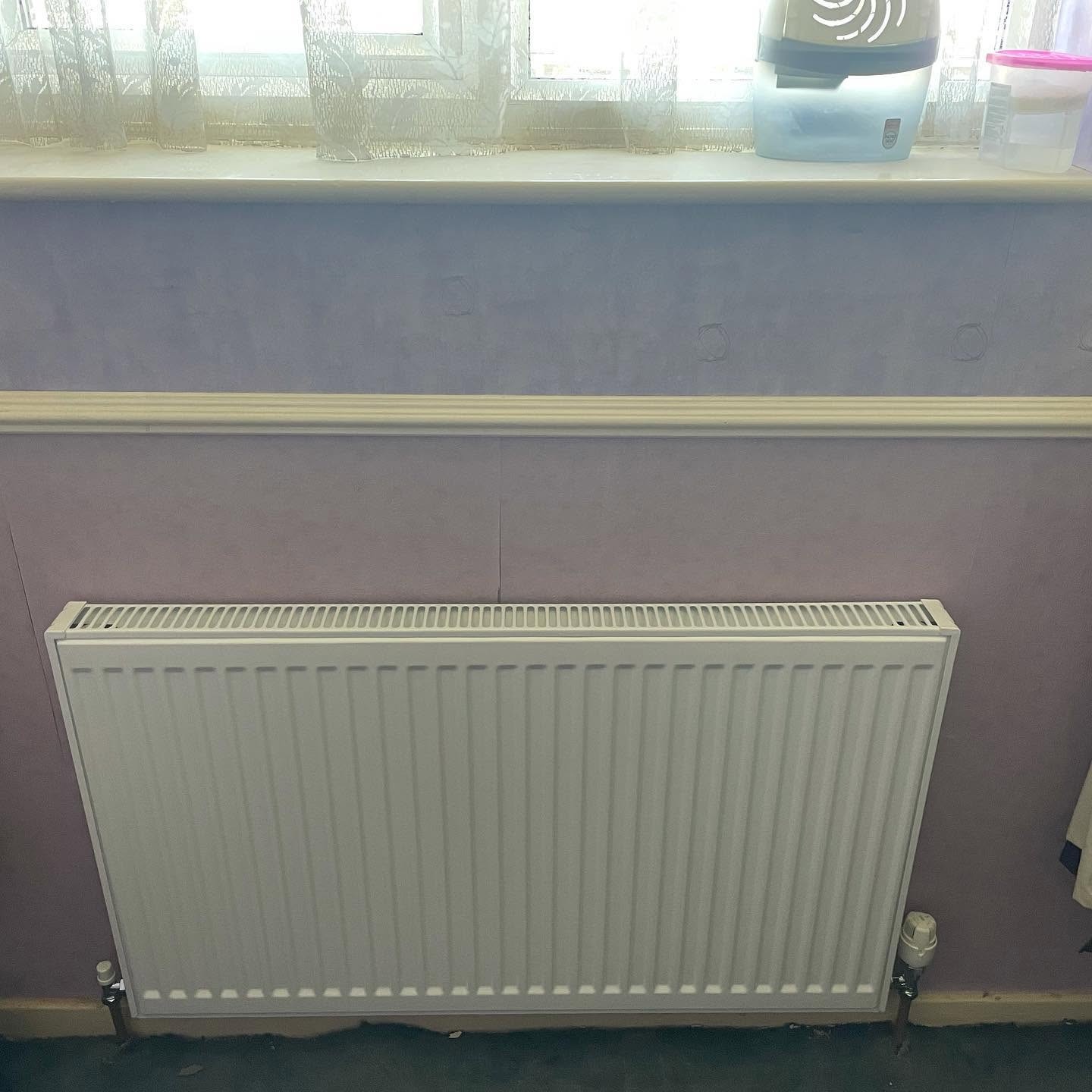
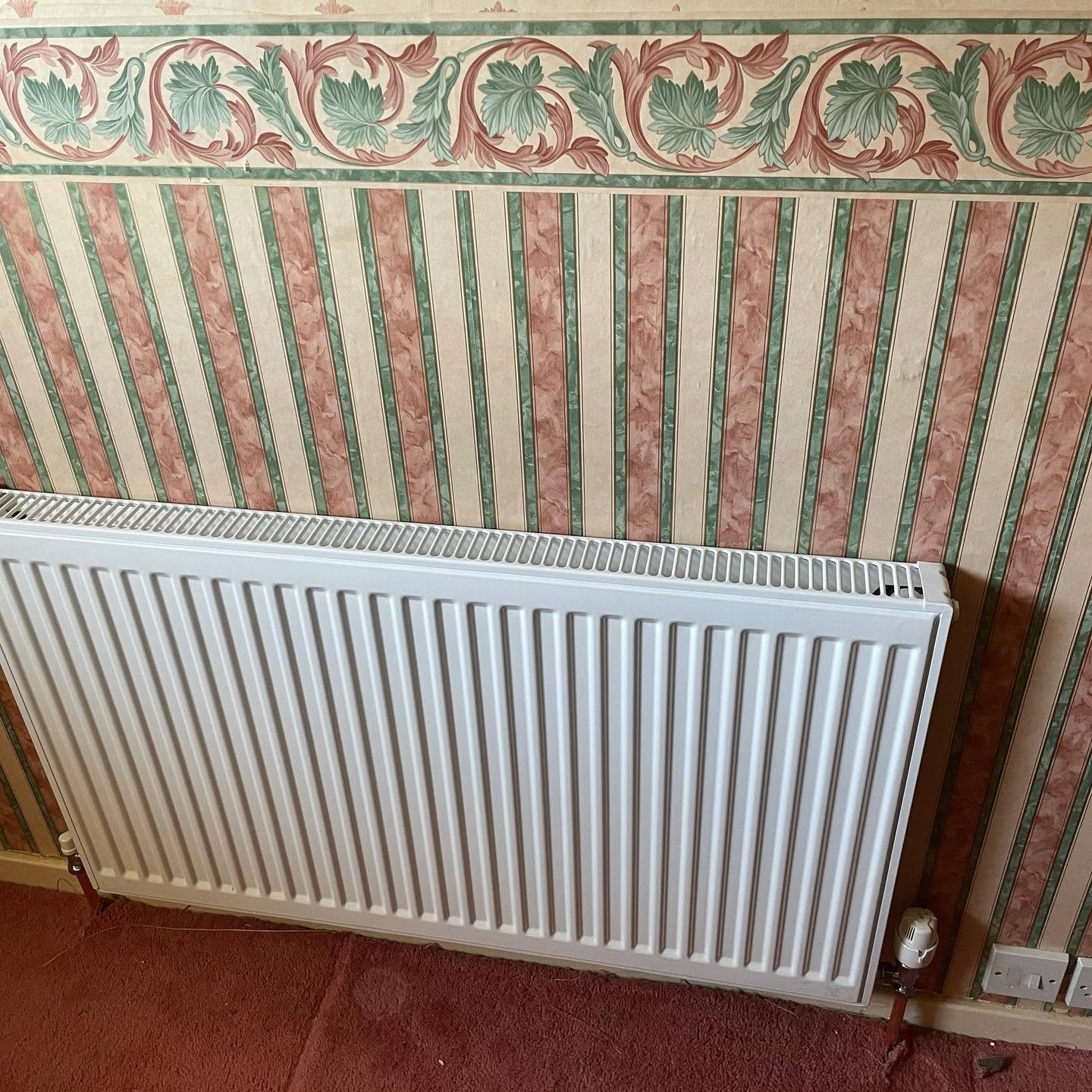
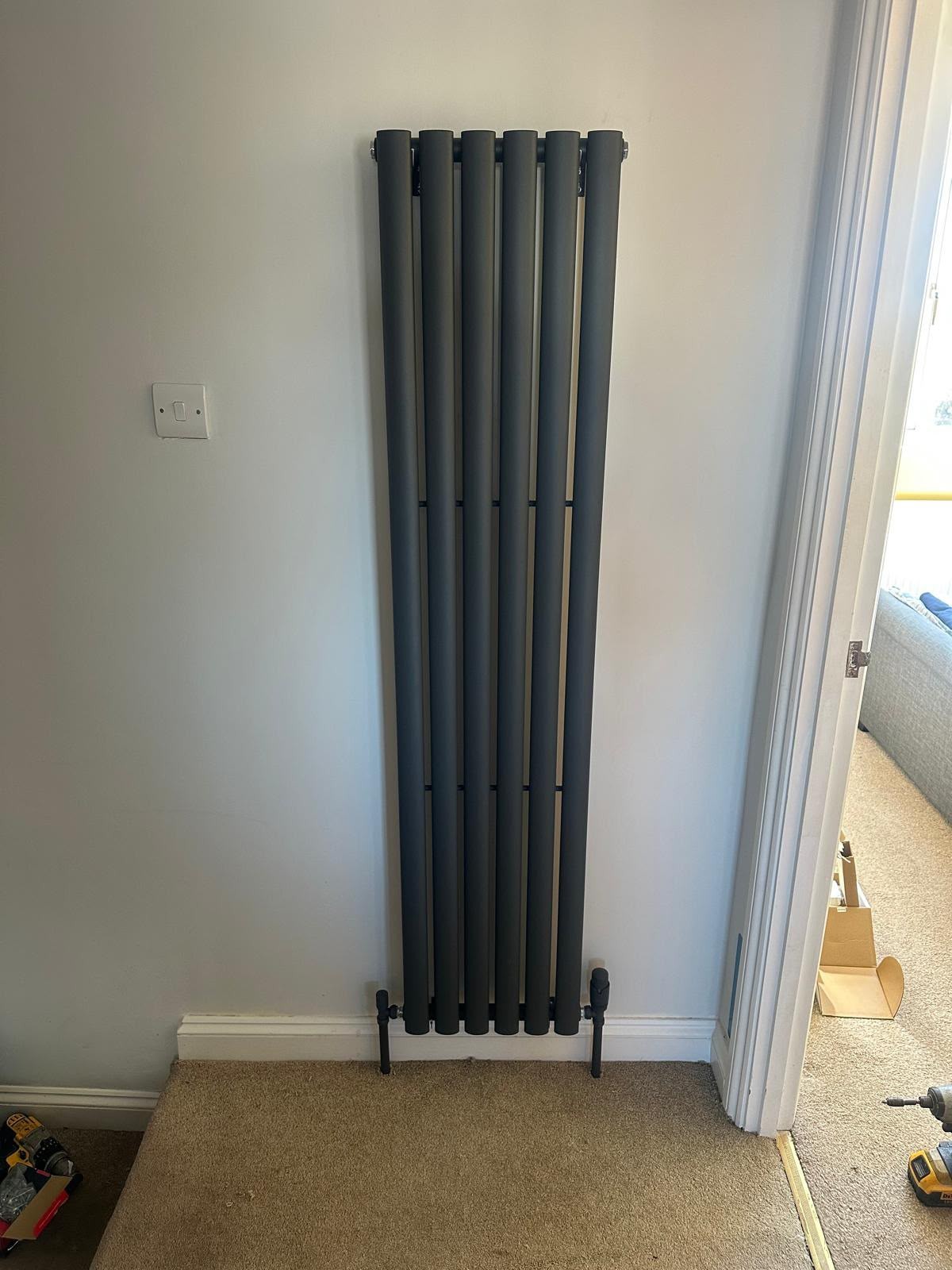
Radiators sized to each room's heat requirement and balanced at commissioning, rather than left to whichever circuit happens to get the flow first.
Heating · Basingstoke & north Hampshire
Boiler, pipework, radiators and controls specified as one system and installed by one Gas Safe registered engineer — so every room reaches temperature, the boiler runs efficiently, and there is nobody to blame but us if it does not.
Gas Safe registered 593588 · 15 years qualified · £2 million public liability · one-year workmanship guarantee
Complete system installs — boiler, pipework, radiators and controls — designed and fitted end to end.
15 years qualified
Apprenticeship completed 2011
Gas Safe 593588
Registered engineer
F-Gas certified
Refcom REF1025590
£2 million cover
Public liability insured
Fixed quotes
Free, and fixed once given
Overview
A full central heating installation replaces or creates the whole system rather than one component of it: the boiler, the primary pipework, the radiators and valves, the controls, and the water treatment that protects all of it. Because everything is specified together, the parts are matched to each other and to the property instead of inherited from whatever was there before.
That distinction matters more than most people realise. Many houses have a modern boiler bolted onto pipework and radiators sized for a system that ran forty years ago at much higher flow temperatures. The boiler is capable; the system around it prevents it from performing. A full installation removes that mismatch.
Sam has 15 years on the tools, having completed his apprenticeship in 2011, and has been self-employed for the last eight. On a system install that continuity matters: the same engineer carries out the heat requirement assessment, fits the pipework, balances the radiators and commissions the boiler, so the design intent survives all the way to handover.
The cost of leaving it
A badly specified heating system does not fail dramatically. It simply underperforms forever. The back bedroom never warms up, so the thermostat is pushed higher, so the rest of the house overheats and the boiler burns more gas to serve one cold room that a correctly sized radiator would have solved.
Undersized pipework has the same effect from a different direction. Restricted flow means the boiler cannot deliver its output, the return temperature stays high, the appliance never enters condensing mode, and the efficiency you paid a premium for on the appliance never materialises.
Old systems also carry their history inside them. Decades of magnetite and sludge sit in radiator bottoms and low points, restricting circulation, wearing pumps and eventually blocking heat exchangers. Connecting a new boiler to that without a proper cleanse is how brand-new appliances fail within their warranty period — and how those warranty claims get declined.
The escalation is financial as much as practical. Every year on a poor system is a year of unnecessary gas, and eventually the floors come up anyway. Doing it once, properly, is cheaper than doing it in fragments over a decade.
Our process
Design first, then installation, then the commissioning that makes the design real.
01
Room by room: dimensions, construction, glazing, exposure and existing radiator sizes, alongside the incoming gas supply, mains water flow and hot water demand. This produces the boiler output, radiator sizes and pipework layout the property actually needs.
02
You get the specification and the price together — boiler type and output, radiator schedule, pipework route, control strategy and treatment. Free to obtain, fixed once accepted, so the budget does not move once work begins.
03
Primary and branch pipework is run and pressure tested, routes are planned to minimise disruption to floors and decoration, and the boiler position, flue route and condensate run are set out. Floors and carpets are protected throughout.
04
Radiators and valves are hung and connected, the boiler is installed, and the control strategy is wired in — thermostat, programmer, zoning where the property calls for it. The system is filled, vented and dosed with inhibitor, with a magnetic filter fitted to protect the appliance.
05
Radiators are balanced so the whole house reaches temperature together, the boiler is commissioned to the manufacturer's schedule with combustion analysed and gas rate checked, and the appliance is registered for its warranty of up to 10 years. You are walked through the controls and left with the paperwork, backed by our one-year workmanship guarantee.
Benefits
A system that performs as designed, with the evidence to show it.
Radiators sized to each room's heat requirement and balanced at commissioning, rather than left to whichever circuit happens to get the flow first.
A correctly sized boiler on correctly sized emitters runs at condensing return temperatures instead of short-cycling against a restricted system.
Up to 10 years' manufacturer warranty on the boiler, protected by a properly cleansed, treated and filtered system and registered on the day of installation.
Zoning and modern controls specified where the property justifies them, so you stop paying to heat rooms nobody is in.
Design, installation, commissioning and aftercare from the same person. No coordination gaps between trades and nobody to point at when something is not right.
Gas Safe registered 593588, £2 million public liability insurance, and full commissioning paperwork at handover. Our workmanship carries a one-year guarantee.
In detail
The decisions that determine whether a heating system is comfortable and cheap to run, or neither.
Most domestic systems use either a two-pipe layout — separate flow and return to each radiator — or, in older properties, a microbore arrangement with small-diameter runs from a manifold. Two-pipe is the default on new installations because it gives even distribution and is far easier to balance.
Copper remains the standard for exposed and primary runs, with plastic barrier pipe used where it is appropriate for concealed runs under floors. What matters more than the material argument is diameter: undersized pipework caps the output of the entire system no matter what boiler is on the wall.
Radiator output is quoted at a test standard that modern condensing systems rarely run at, which is why a radiator that was adequate on a 1980s system can fall short on a modern one. Sizing to the room's calculated heat loss, with an allowance for lower flow temperatures, is what produces a house that heats evenly.
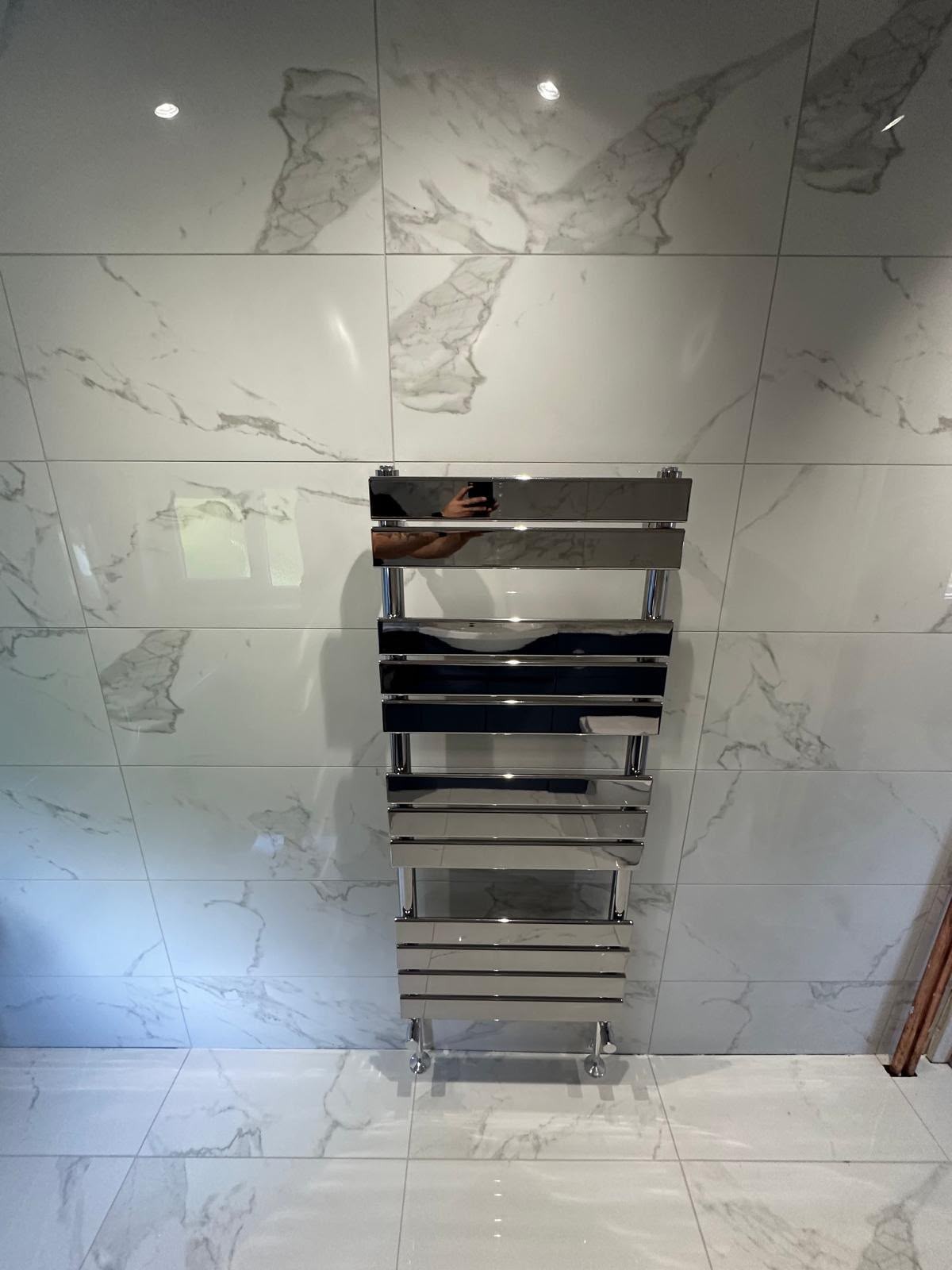
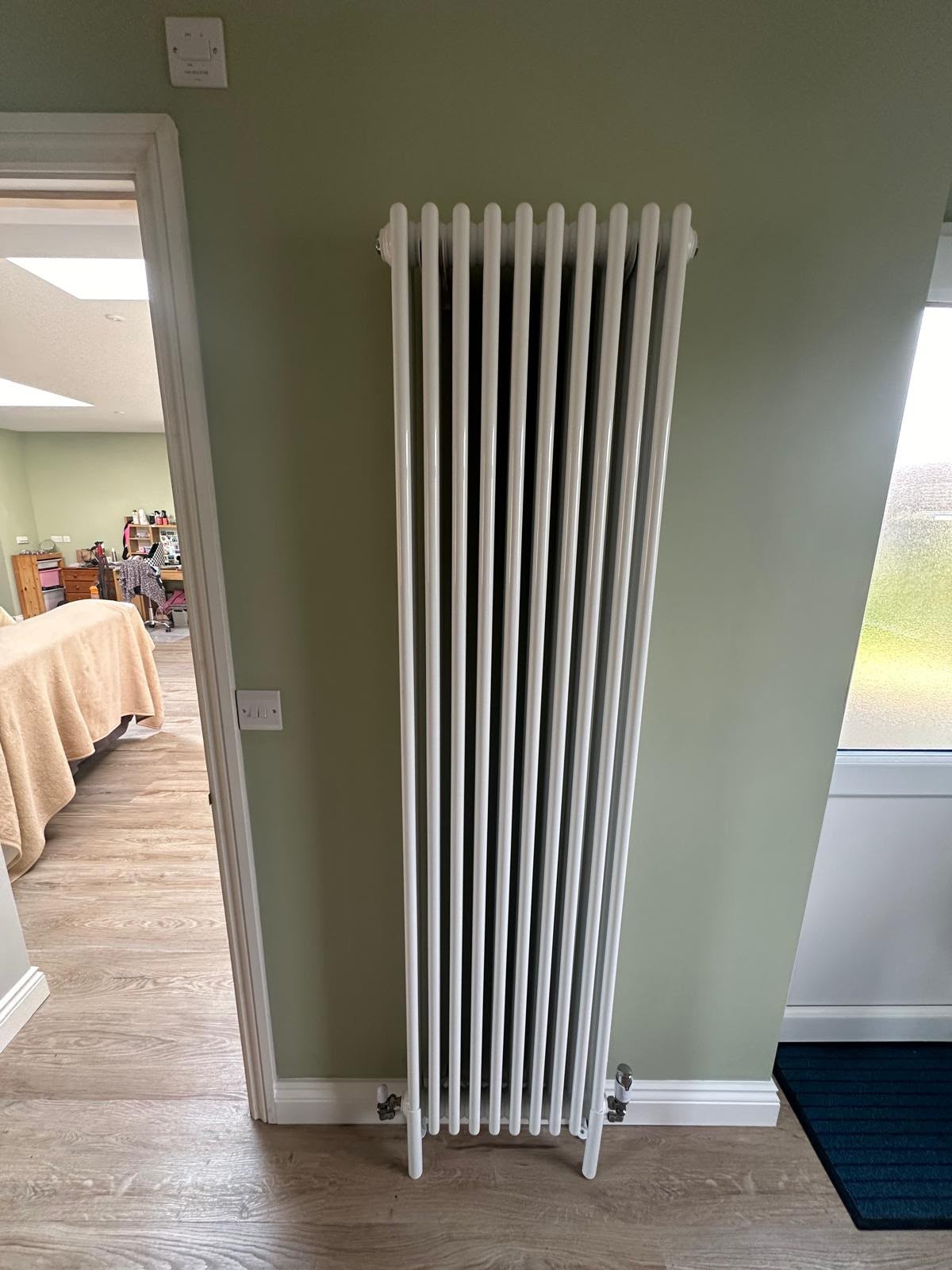
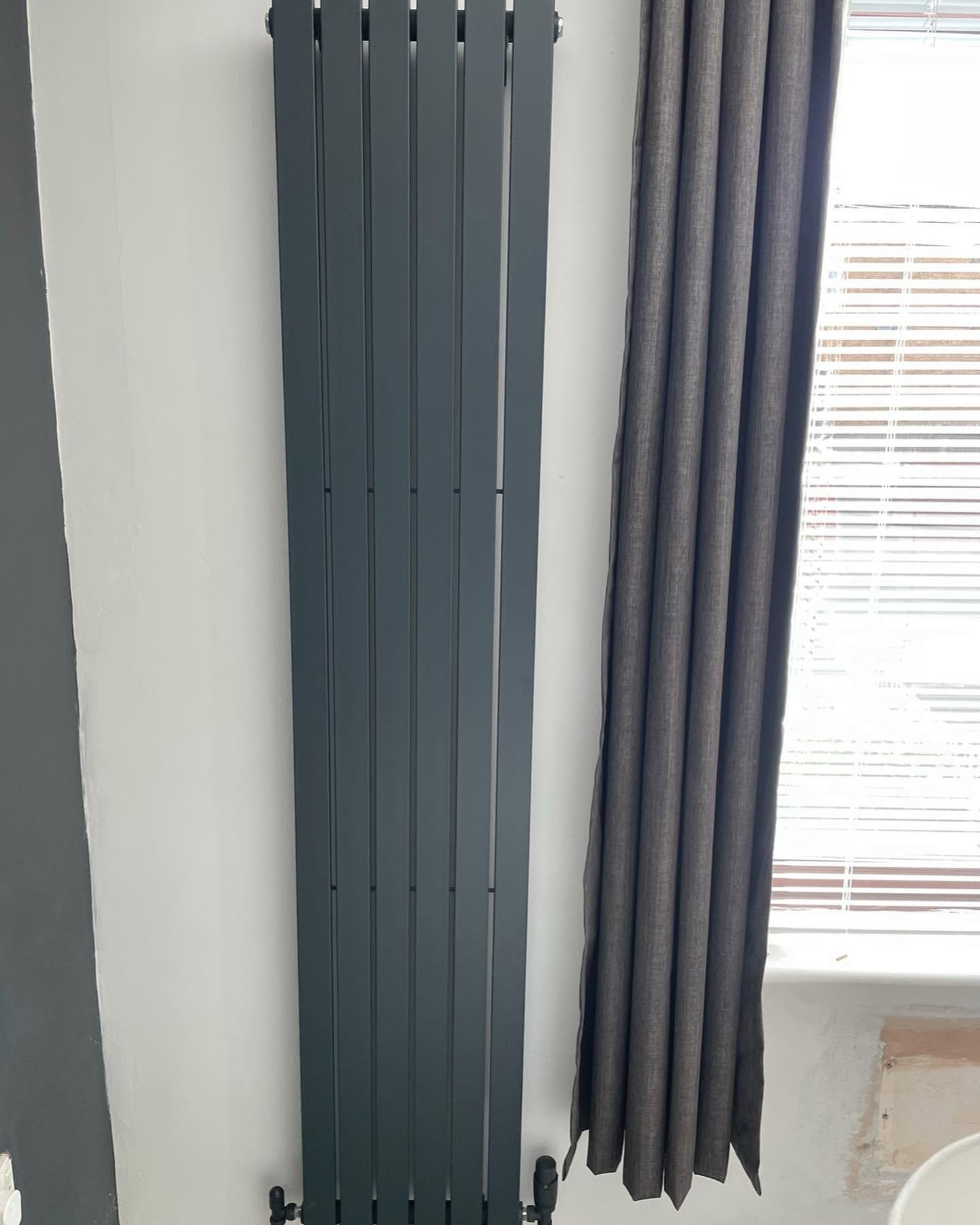
Beyond panel radiators, there are practical variations: low-surface-temperature radiators where vulnerable occupants are a consideration, vertical radiators where wall space is scarce, and towel rails in bathrooms which usually need supplementing rather than relying on alone.
The control strategy determines how much of the theoretical efficiency you actually see. At minimum, a room thermostat and programmer plus thermostatic radiator valves throughout. On larger or two-storey properties, splitting into zones with separate time and temperature control stops you heating the whole house to suit one room.
Weather compensation and load compensation, where the boiler supports them, lower flow temperature as demand falls and keep the appliance condensing for far more of its running time. Where the boiler specified offers it, we set it up rather than leaving it disabled in a menu.
New installations are almost always sealed systems: pressurised, with an expansion vessel and no loft tanks. That removes the open vent and feed arrangement, and with it a common source of oxygen ingress and corrosion.
Hot water is then either instantaneous from a combi, or stored in an unvented cylinder fed by a system boiler. Properties with two or more bathrooms usually want the stored option, and we install and maintain unvented cylinders as part of the same package.
A new system is cleansed, dosed with corrosion inhibitor and fitted with a magnetic filter. On a full installation this is straightforward; on a system that reuses existing pipework or radiators, a powerflush is usually the right precursor and is quoted openly.
Inhibitor is not permanent. It depletes, particularly after any work that drains part of the system, which is one more reason annual servicing is worth having rather than skipping.
The cheapest time to run heating pipework is when the floors are already up. On renovation and extension projects, coordinating the first fix with the building programme avoids lifting new flooring later and lets radiator positions be planned around the finished layout rather than around existing pipe stubs.
In older north Hampshire properties — solid-wall cottages and period terraces around Overton, Kingsclere and Micheldever among them — heat loss is higher and radiator sizing has to reflect that honestly. Specifying to the real numbers avoids the classic outcome of a new system that still cannot hold temperature in the coldest rooms.
Questions
Anything not covered here, call 07825 758511 and ask. 8am–5pm, Monday to Friday, with out-of-hours emergency call-outs available.
It depends on the property size, radiator count, pipework routes and boiler specification, so every system is surveyed and quoted individually. Boiler installations alone start from £1,900 + VAT. Quotes are free and fixed once given, so the figure you agree is the figure you pay.
Typically several days rather than one, depending on property size, the number of radiators and how much pipework has to be run. The programme is set out in the quote so you know what to expect day by day.
Yes. That involves running new primary pipework, positioning and hanging radiators, establishing the boiler position with a compliant flue and condensate route, and confirming the incoming gas supply is adequate for the appliance. All of it is assessed at the free survey.
Not always. Existing radiators can be reused if they are sound and correctly sized for the room at modern flow temperatures. Where they are undersized or heavily corroded internally, reusing them limits the performance of everything else and we will tell you that plainly.
Some floor access is usually unavoidable when running new pipework. Routes are planned to minimise it, floors and carpets are protected, and the work area is contained rather than spread through the house.
One year on our workmanship, plus the manufacturer warranty on the appliance, which runs up to 10 years depending on the boiler chosen. The boiler is registered with the manufacturer on the day of installation.
On a two-storey or larger property, zoning usually pays for itself in avoided heating of unused space. Smart controls are worth it for households with irregular schedules. We specify them where they earn their place and say so where they do not.
Yes. The system is cleansed, dosed with inhibitor and fitted with a magnetic filter. Where existing pipework and radiators are being retained on a heavily contaminated system, a powerflush is recommended and quoted separately and openly.
Basingstoke and north Hampshire, including Hook, Hartley Wintney, Tadley, Andover, Kingsclere, Overton, Micheldever and Aldermaston.
Yes — including unvented mains-pressure hot water cylinders, which are usually the right answer for properties with two or more bathrooms. Heating and hot water are specified together as one system.
Next step
Free survey, room-by-room assessment and a written price that does not move. One Gas Safe registered engineer from design to handover.